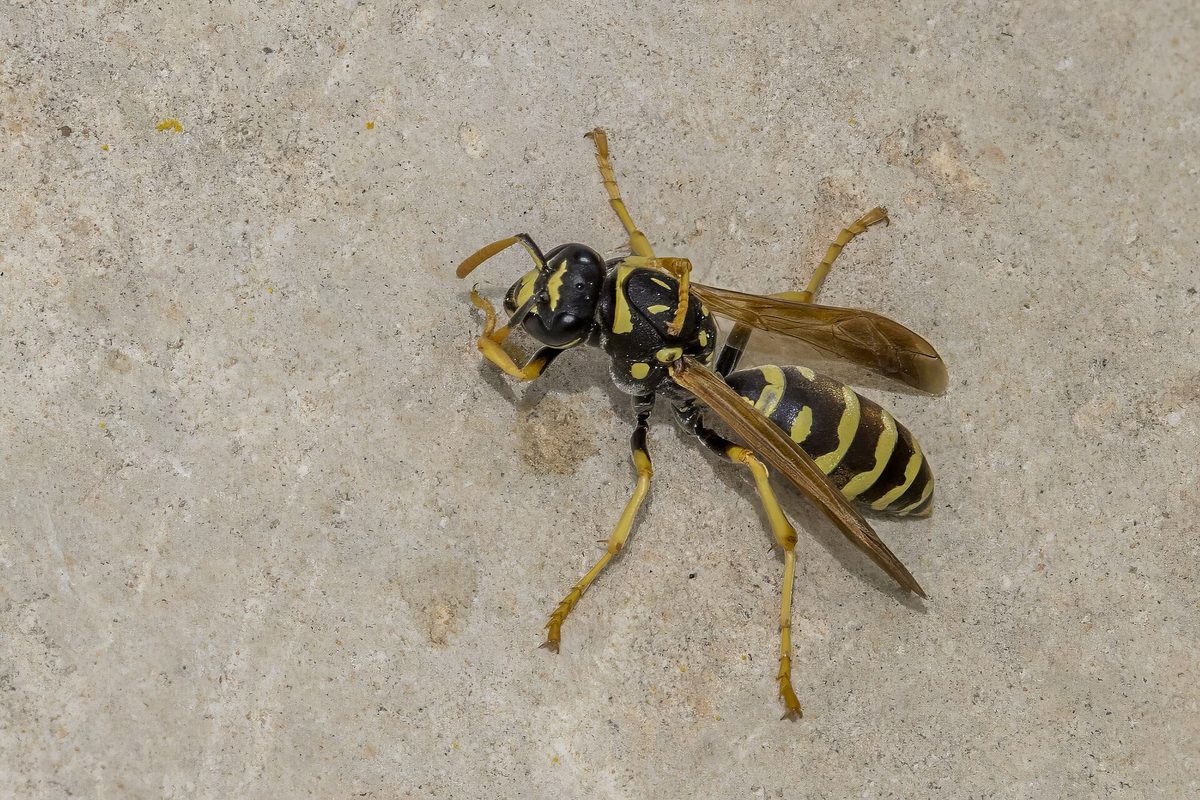
Paper Wasp
Polistes gallicus
The most common stinging insect in Maltese homes. It builds open, umbrella-shaped nests under pergolas, window reveals, balcony ceilings and inside roller shutter boxes.
Where it lives
Sheltered outdoor structures: shutter boxes, pergolas, eaves, balcony soffits, garden sheds, disused pipes, satellite dishes and rubble wall cavities.
Signs
- A grey papery nest of open hexagonal cells, without an outer shell
- Wasps repeatedly entering the same gap in a shutter box or eaves
- Increasing wasp activity around a single point of the façade
- Aggressive behaviour when a shutter is opened or a window is closed
Risks
- Painful stings, and repeated stings from a defended nest
- Risk of anaphylaxis in sensitised people
- Nests in shutter boxes bring wasps directly into bedrooms
- Particular danger to children and to anyone working at height near a nest
Prevention
- Inspect shutter boxes, pergolas and eaves in April and May when nests are small
- Seal gaps into shutter housings and roof voids over winter
- Keep bins closed and clear fallen fruit in late summer
- Do not swat or spray a nest yourself, which triggers mass defence
- Never block a nest entrance while wasps are inside
Treatment
We treat and remove nests wearing full protective equipment, usually in the evening when the colony is present. A licensed insecticidal dust or foam is applied to the nest and entry point, and the nest is physically removed once activity ceases. Entry gaps are then proofed to stop rebuilding the following season. Most jobs are completed in a single visit.
Related pests
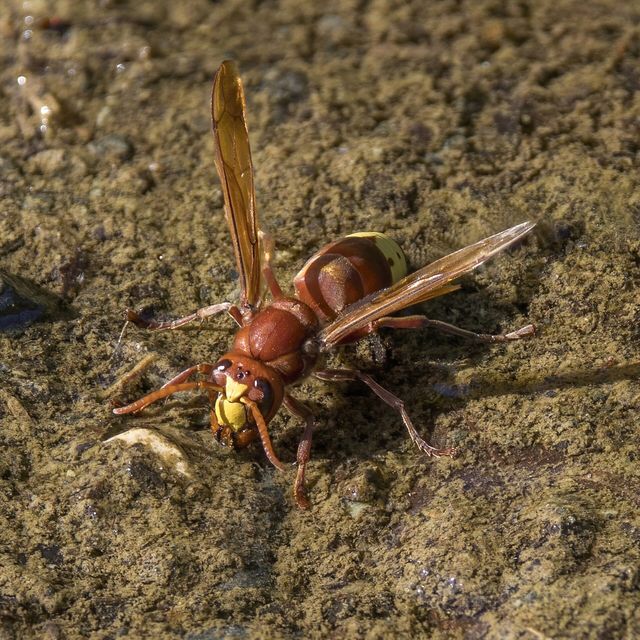
Oriental Hornet
Vespa orientalisMalta’s largest stinging insect, and a growing problem in late summer.
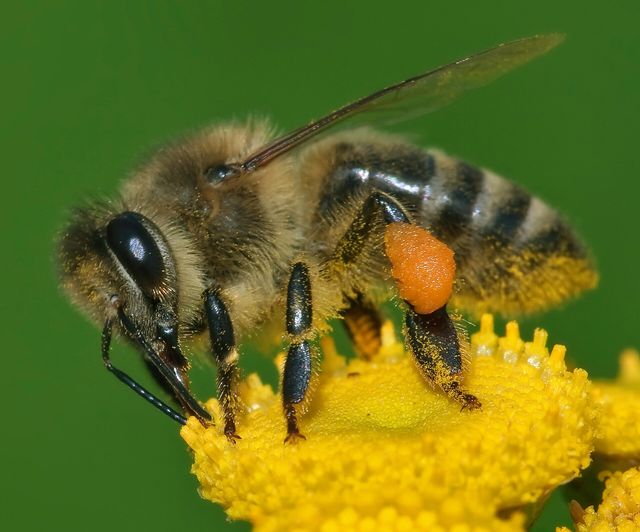
Honey Bee (Swarm)
Apis mellifera ruttneriHoney bees are beneficial pollinators and the Maltese honey bee is a distinct local subspecies.
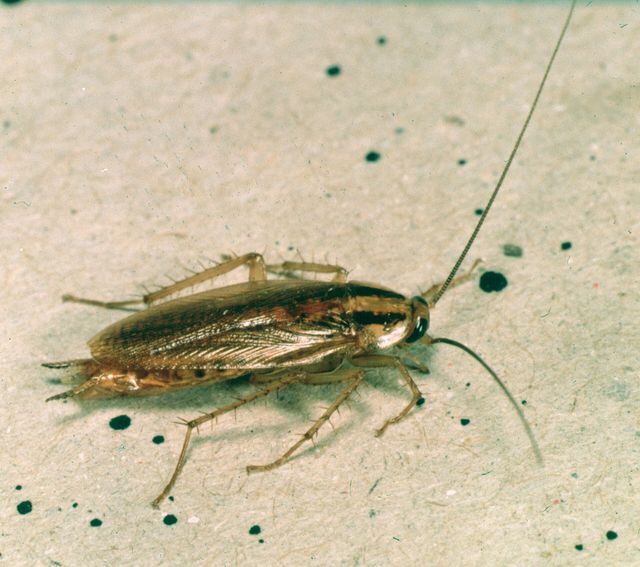
German Cockroach
Blattella germanicaThe most serious cockroach pest in Malta, and the hardest to get rid of.
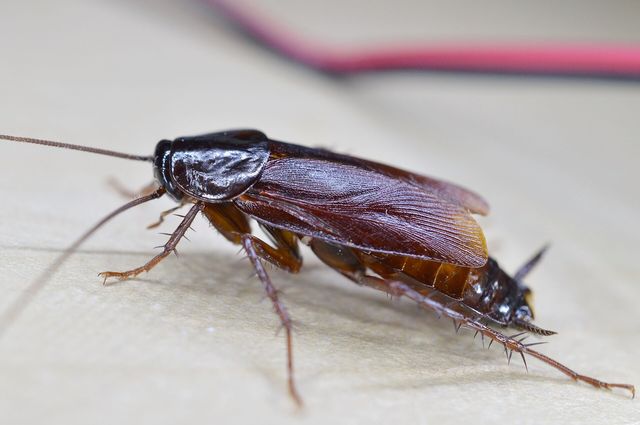
Oriental Cockroach
Blatta orientalisThe large dark cockroach that comes up out of drains, wells and manholes on summer nights.