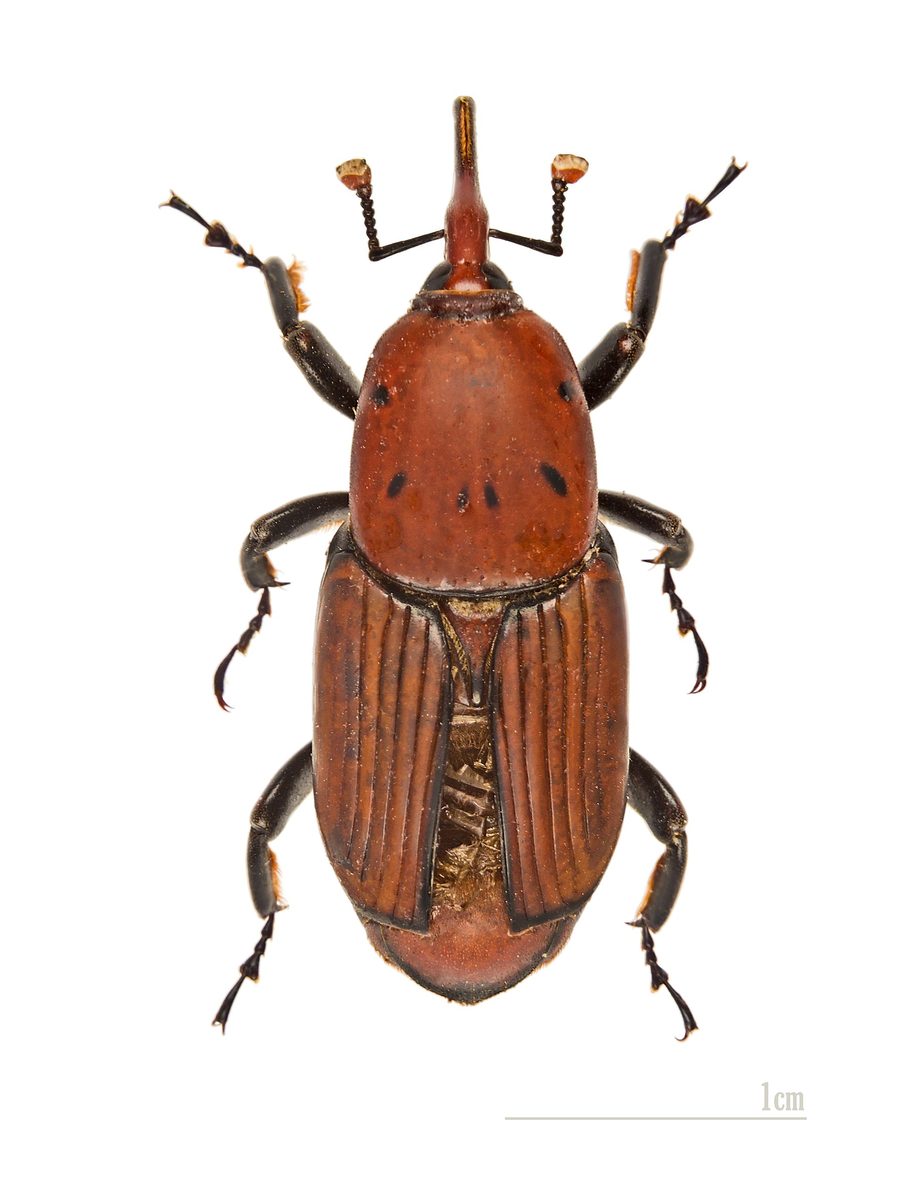
Red Palm Weevil
Rhynchophorus ferrugineus
The single most destructive pest of palm trees in Malta. Larvae bore through the crown from the inside, and by the time the fronds collapse the tree is usually beyond saving. Early detection is everything.
Where it lives
Attacks Canary Island date palm above all, plus date and other palms. Adults fly considerable distances and lay eggs in wounds, pruning cuts and the frond bases of the crown.
Signs
- Fronds turning yellow then collapsing, especially in the centre of the crown
- A lopsided or asymmetric crown as one side dies back
- Chewed fibre and reddish-brown ooze at frond bases
- Fibrous cocoons the size of a fist at the base of fronds or on the ground
- A faint fermenting smell and audible chewing from inside the trunk
- Holes in the trunk with gum or sawdust extrusion
Risks
- Kills mature palm trees, often within months of infestation
- Very high replacement cost for mature specimen palms
- Collapsing crowns and falling fronds are a genuine safety hazard
- Spreads quickly to neighbouring palms
- Infested palms must be treated or removed under plant health rules
Prevention
- Avoid pruning between March and November, when fresh cuts attract egg-laying adults
- Seal every pruning wound immediately with an approved sealant
- Inspect the crown of every palm monthly during the season
- Apply preventative treatments to healthy palms in high-risk areas
- Never move or replant untreated palm material; report suspected infestation
- Buy palms only from a supplier who can show treatment records
Treatment
We run a palm protection programme combining crown drenching, trunk injection with authorised systemic products, pheromone mass-trapping to reduce local adult pressure, and scheduled inspection. Early-stage infestations can often be saved. Palms beyond recovery must be felled and disposed of correctly to protect neighbouring trees, and we handle that safely and legally.
Related pests
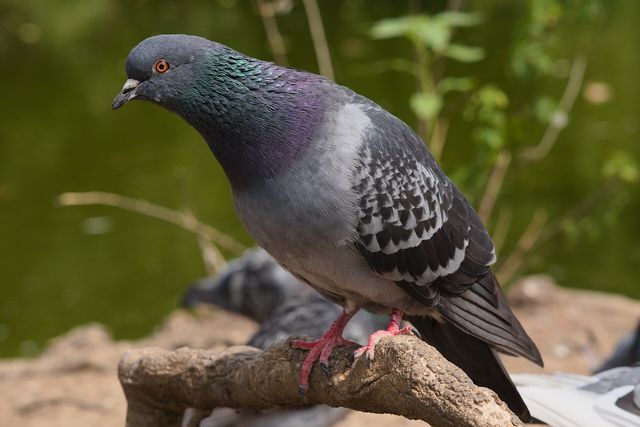
Feral Pigeon
Columba livia domesticaPigeons nesting on ledges, balconies and roofs cause more damage than most people expect.
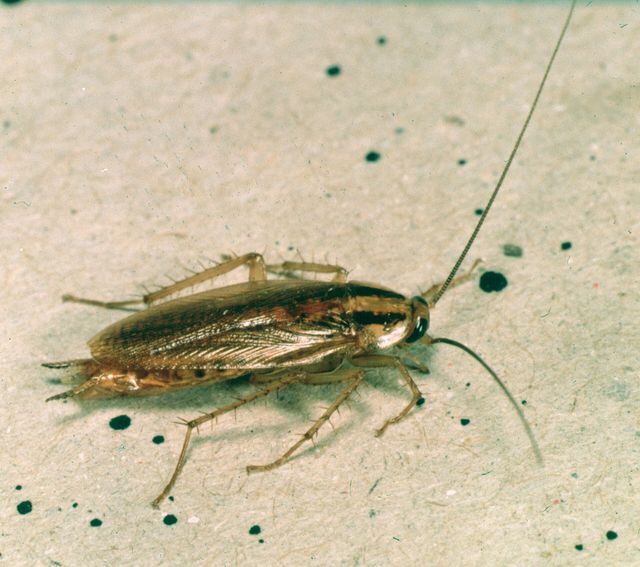
German Cockroach
Blattella germanicaThe most serious cockroach pest in Malta, and the hardest to get rid of.
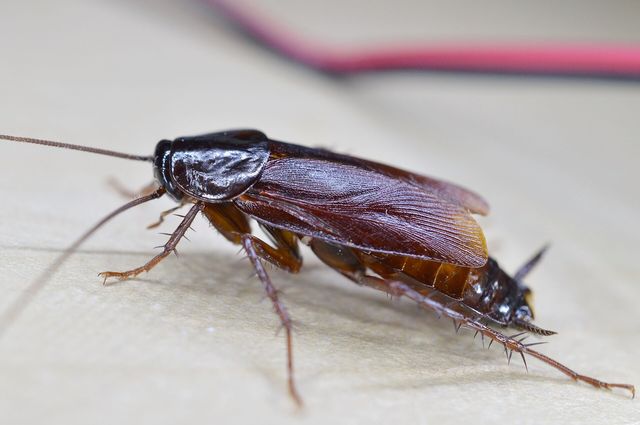
Oriental Cockroach
Blatta orientalisThe large dark cockroach that comes up out of drains, wells and manholes on summer nights.
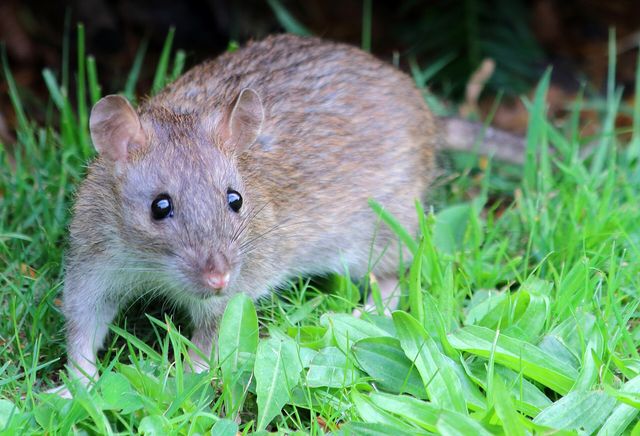
Brown Rat
Rattus norvegicusAlso called the sewer or Norway rat, and the most common rat in Maltese towns.