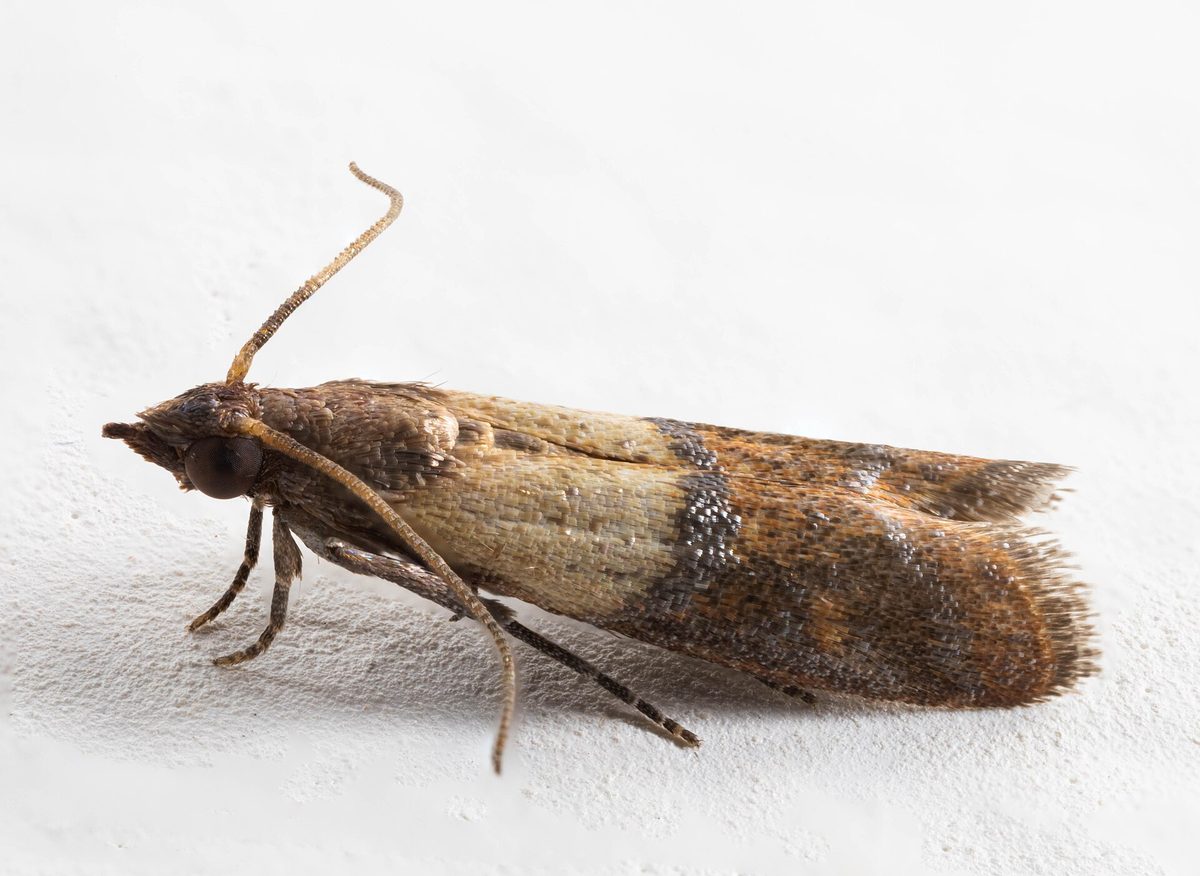
Pantry Moth
Plodia interpunctella
Almost always arrives inside a packet of food already infested. The larvae spin silk webbing through flour, rice, nuts, dried fruit, pasta and pet food.
Where it lives
Kitchen cupboards, pantries, dry stores and warehouses. Larvae wander far from the food source to pupate, often in the top corners of cupboards and rooms.
Signs
- Small two-tone moths flying in a slow zigzag around the kitchen
- Silk webbing and clumping in flour, rice, cereal, nuts or pet food
- Larvae or silk cocoons in cupboard corners and along shelf edges
- Sticky webbing under jar lids and packet seals
Risks
- Contaminates and spoils stored food, requiring disposal
- Spreads rapidly through an entire pantry or dry store
- Significant stock losses and rejected deliveries in commercial premises
Prevention
- Check dry goods at purchase and use older stock first
- Decant flour, rice, cereal and pet food into airtight containers
- Freeze nuts, dried fruit and flour for 72 hours before storing
- Use pheromone traps in pantries and dry stores as an early warning
Treatment
The infested product must be identified and removed, and we help trace it. Cupboards and shelving are then vacuumed and treated at edges and voids, with pheromone traps installed to confirm the population is falling. For food businesses we advise on stock rotation, delivery inspection and dry store monitoring as part of the pest control file.
Related pests
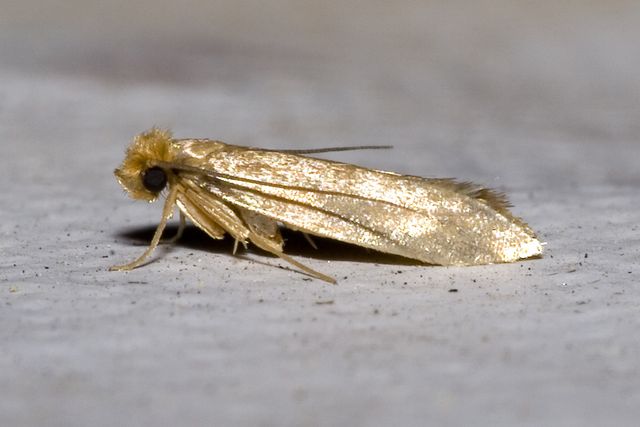
Clothes Moth
Tineola bisselliellaThe adults do not feed at all.
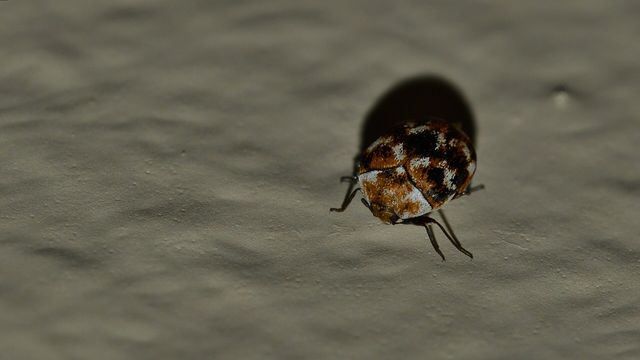
Carpet Beetle
Anthrenus verbasciThe hairy larvae, known as woolly bears, chew through wool carpets, natural fibre rugs and stored textiles.
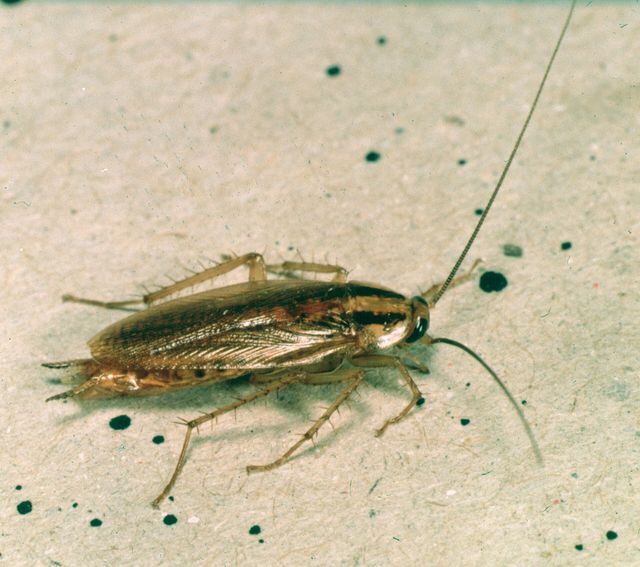
German Cockroach
Blattella germanicaThe most serious cockroach pest in Malta, and the hardest to get rid of.
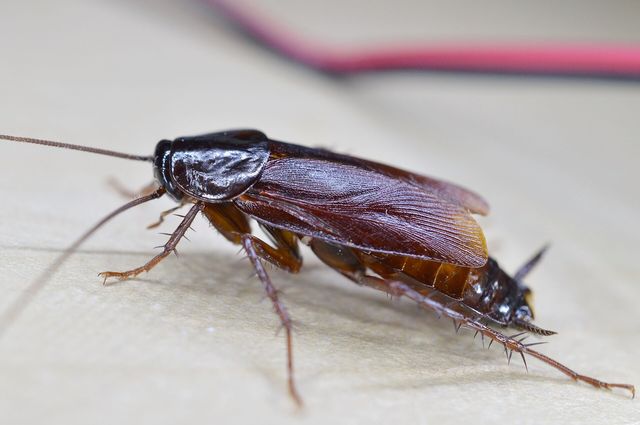
Oriental Cockroach
Blatta orientalisThe large dark cockroach that comes up out of drains, wells and manholes on summer nights.